
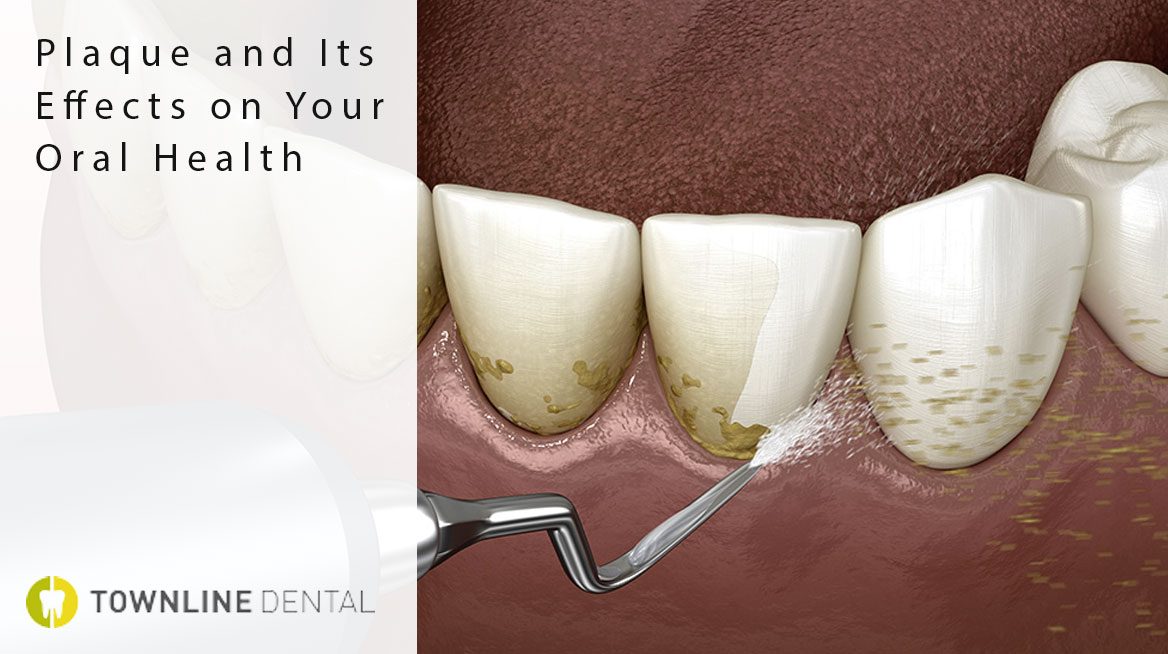
Plaque is a sticky layer of bacteria and food that can build up on your teeth and gums. If you don’t remove it, it can lead to serious dental issues like gum disease and tooth decay. Knowing how plaque forms and how to prevent it is important for maintaining a healthy smile.
Signs of plaque-related oral health issues
Plaque buildup is a major contributor to a variety of oral health issues. Understanding its effects can help you take proactive steps to maintain your dental health. Here are some of the common problems associated with plaque:
- Gingivitis: Plaque buildup often causes gingivitis, a mild gum disease with symptoms like red, swollen, and bleeding gums, and bad breath.
- Periodontitis: If left untreated, gingivitis can progress to periodontitis, a more severe gum disease that damages the bone and connective tissue around the teeth.
- Cavities: Plaque bacteria produce acids that erode tooth enamel, leading to cavities. If untreated, these cavities can worsen and damage the tooth.
- Bad Breath (Halitosis): The accumulation of plaque can lead to persistent bad breath due to bacteria buildup.
- Tooth Discolouration: Plaque can cause teeth to discolour, affecting their appearance.
- Tooth Loss: Advanced plaque buildup can weaken the support structure of teeth, increasing the risk of tooth loss.
- Oral Hygiene Challenges: Excess plaque makes it harder to maintain proper oral hygiene, worsening dental health over time.
Preventing plaque with good oral hygiene
To prevent plaque buildup and maintain good oral hygiene, follow these essential steps:
- Brush Twice Daily: Use a soft-bristled toothbrush and fluoride toothpaste to brush for at least two minutes, covering all surfaces of your teeth.
- Floss Daily: Clean between your teeth with dental floss to remove plaque and food particles that your toothbrush can’t reach.
- Use Mouthwash: Incorporate an antibacterial mouthwash to help reduce harmful bacteria in your mouth.
- Maintain a Healthy Diet: Limit sugary and acidic foods and drinks that can contribute to plaque formation.
- Stay Hydrated: Drink plenty of water to help wash away food particles and bacteria.
- Visit Your Dentist Regularly: Schedule professional cleanings and check-ups every six months to remove hardened plaque (tartar) and catch any issues early.
Dental treatments for plaque removal
Alongside good oral hygiene, professional dental treatments can effectively tackle plaque-related issues. Here are some common treatments:
- Professional Cleaning (Prophylaxis): A dental hygienist or dentist removes hardened plaque (tartar) from the teeth, including below the gumline, helping to prevent gum disease and other dental problems.
- Scaling and Root Planing: This deep cleaning treatment targets the root surfaces of the teeth to eliminate stubborn plaque and tartar deposits, especially for more severe gum disease.
- Dental Sealants: A protective coating is applied to the chewing surfaces of the back teeth to prevent plaque buildup.
- Fluoride Treatments: Professional fluoride applications strengthen tooth enamel, making it more resistant to decay caused by plaque.
Conclusion
Plaque is a common oral health issue, but you can manage it effectively with the right habits and regular care. By learning how plaque forms, identifying its signs, and maintaining a strong oral hygiene routine, you can prevent plaque buildup and related problems. Regular dental checkups are also crucial for thorough cleanings and personalized advice. Taking proactive steps now will help ensure a healthy, confident smile in the future. To schedule your appointment with Townline Dental, call 604-744-1513.

